

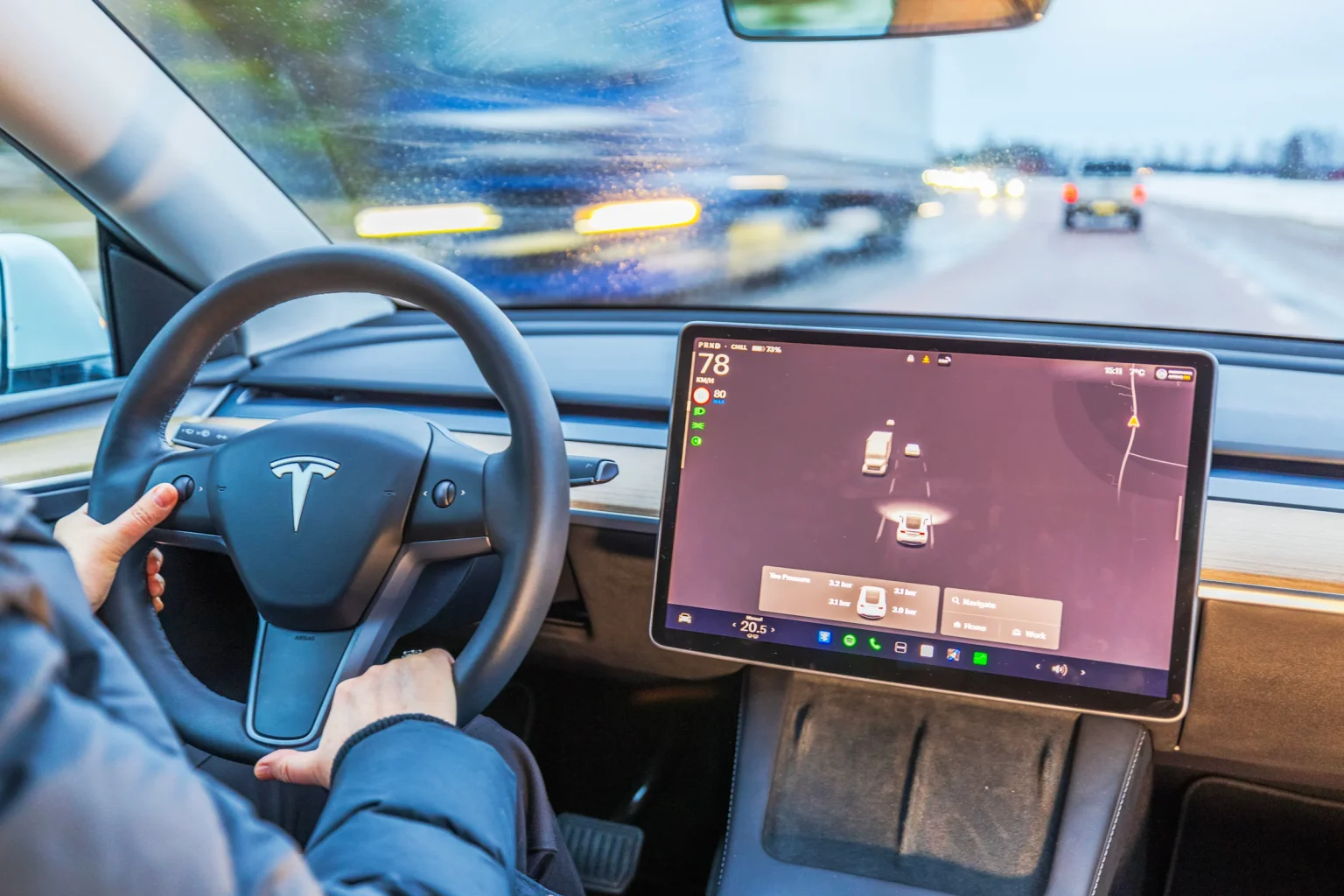
Tesla has once again made headlines with a new update to its Autopilot system—an upgrade that promises to enhance safety, improve comfort, and bring the company one step closer to fully autonomous driving. The latest update, rolled out in stages to a select group of vehicles before wider release, refines existing features and introduces new capabilities designed to make driving more seamless.
According to Tesla, this latest Autopilot update focuses on refining the vehicle’s ability to respond to real-world conditions more naturally. With enhanced neural network processing, the system can better recognize lane markings, traffic signals, and pedestrians—even in low-visibility situations such as rain or fog. The company has also implemented improvements to adaptive cruise control and lane centering, aiming to reduce jerky maneuvers during dense traffic or complex road layouts.
Drivers may also notice a smoother handoff between manual control and Autopilot-assisted driving. This improvement means less abrupt transitions when enabling or disabling the system, particularly useful for drivers on highways where conditions fluctuate frequently. Tesla vehicles will now be more precise when merging, changing lanes, or slowing for vehicles ahead, thanks to software that continuously learns from the company’s vast global fleet data.
A standout addition in this release is Tesla’s enhanced “Autosteer on City Streets,” an experimental feature that allows the vehicle to handle more urban driving scenarios. The system is designed to navigate intersections, make controlled turns, and respond to road signage with minimal driver intervention. While still in beta testing, these changes bring the vehicle closer to understanding complex urban traffic environments—something the company has been striving toward for years.
Exploring the new capabilities and key limitations
While the upgrades represent an important milestone, Tesla emphasizes that its Autopilot system remains a driver-assistance tool, not a fully autonomous driving platform. In its official notes, the company reiterates that a fully attentive driver must remain in control at all times, with hands on the wheel and eyes on the road. Despite the new intelligence behind the system, the human element remains critical.
The most discussed limitation continues to be the system’s reliance on visual and camera-based sensors rather than radar or lidar. Although Tesla maintains that its camera-focused approach provides better real-time understanding of surroundings, critics argue that in poor lighting or adverse weather, the system may experience reduced performance. The latest update seeks to mitigate this through improved video processing and object recognition, but perfection in all environments is still a challenge.
Another key limitation concerns regulatory frameworks. In many markets, Autopilot’s advanced functionalities—such as automatic lane changes or self-navigating city driving—are restricted due to safety regulations. Tesla must continue to balance innovation with compliance, often releasing certain features only in regions where they have obtained necessary approvals.
For current Tesla owners, software updates are delivered over the air, ensuring vehicles are kept up to date with the most recent improvements. Still, user feedback remains essential to Tesla’s continuous refinement process. Early testers have already reported that the cars feel more stable during sharp curves and better at maintaining appropriate following distances, though a few have noted sporadic slowdowns in intricate urban intersections.
Looking ahead, this Autopilot upgrade seems to serve as both a performance enhancement and a foundation for Tesla’s larger goal—achieving what it calls “Full Self-Driving” (FSD). The company’s ambition is to create a system that can drive safely and efficiently without human input, but experts agree that such a reality remains several years away, given current technological and regulatory constraints.
In summary, Tesla’s most recent Autopilot update underscores the company’s steady progress in vehicle automation. It’s not yet the driverless future that enthusiasts envision, but it represents a significant step toward smarter, safer, and more capable cars. With every software iteration, Tesla refines its blend of machine learning, safety data, and real-world driving experience—demonstrating once again that innovation on the road is as much about evolution as it is about revolution.