

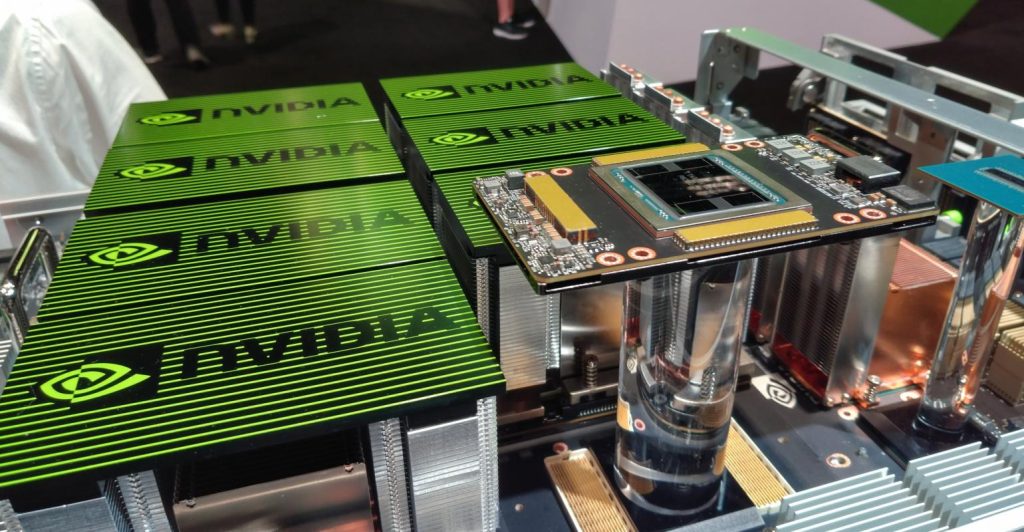
In a major announcement that underscores its leadership in artificial intelligence, NVIDIA has unveiled an array of new AI hardware solutions designed to accelerate computing performance across industries. The launch marks another pivotal step in the company’s ongoing effort to provide the foundational hardware that fuels modern AI—from data centers and autonomous machines to next-generation workstations.
During the unveiling, NVIDIA’s executives outlined how the latest hardware architecture is engineered to handle the ever-expanding complexity of AI workloads. The new products emphasize speed, efficiency, and scalability, integrating advanced designs that push the limits of parallel processing. At the core of this new generation are GPUs and dedicated AI accelerators built on cutting-edge semiconductor technology, offering unprecedented computing throughput while maintaining improved energy efficiency.
NVIDIA’s new systems are not merely incremental upgrades; they’re purpose-built to support the next era of generative AI, scientific computing, and high-performance simulations. The hardware is optimized to handle massive language models, computer vision networks, and multi-modality AI systems that require enormous processing capability. Enhanced memory architecture and interconnect bandwidth allow models with billions or even trillions of parameters to train and infer more efficiently, significantly reducing computation time and cost.
Beyond the raw performance metrics, NVIDIA is also focusing on creating a unified AI platform that integrates hardware and software seamlessly. New software optimizations, from CUDA to TensorRT and other frameworks, ensure that developers can exploit every ounce of power the hardware provides. This co-design approach between hardware and software not only accelerates AI training and inference but also enhances power management and sustainability.
Moreover, NVIDIA’s new hardware solutions extend to edge computing and robotics. Specialized modules and embedded systems, built on the same architectural foundation as their data-center counterparts, are designed for industrial automation, autonomous vehicles, and smart city applications. These compact, energy-efficient devices bring real-time AI capabilities closer to where data is generated, enabling quicker decision-making and smoother integration with cloud-based analytics.
Industry analysts view this launch as a critical milestone in the AI hardware landscape. As AI adoption spreads across healthcare, finance, manufacturing, and the creative sectors, the demand for powerful, flexible computation is skyrocketing. NVIDIA’s advancements are poised to redefine how organizations build, deploy, and scale AI-driven solutions, bridging the gap between research innovation and real-world impact.
With these new platforms, NVIDIA continues to shape the technological backbone of the AI revolution. The latest hardware announcement not only reinforces the company’s position at the forefront of accelerated computing but also signals the dawn of a new era in intelligent systems—where performance, efficiency, and scalability converge to power the breakthroughs of tomorrow.
Next-Gen Chips Power the Future of Intelligent Systems
At the heart of NVIDIA’s new portfolio are its next-generation chips—an evolution that represents years of research in high-performance architecture. Each component is built with a blend of silicon-level innovation and system-level engineering, ensuring that AI workflows can run faster and smarter than ever before.
These cutting-edge chips leverage advanced process nodes, enabling higher transistor density and improved thermal performance. The result is faster model training, lower latency in inference, and the ability to handle increasingly complex neural networks. Compared to previous generations, NVIDIA’s new GPUs deliver substantial improvements in computational efficiency, with optimized tensor cores and enhanced interconnects tailored for multi-GPU scalability.
NVIDIA’s hardware ecosystem also includes a new range of data processing units (DPUs) and networking technologies that transform the way data flows within and between data centers. By offloading network, storage, and security tasks from traditional CPUs, these intelligent network processors free up resources for high-value AI computations, leading to greater agility in large-scale deployments.
In addition, the company is introducing full-stack AI systems that combine the newest GPUs, CPUs, and networking solutions within tightly integrated server infrastructure. These platforms are built for enterprise-grade workloads, training large language models, running real-time analytics, and supporting digital twins in industrial environments. Cloud service providers and research institutions alike are expected to benefit, scaling their AI capabilities in line with growing computational demands.
The unveiling of these next-gen chips reaffirms NVIDIA’s commitment to driving innovation at every layer of AI development. The company’s forward-looking strategy aims to deliver not just faster processors, but smarter solutions that align with the needs of an AI-driven world. Whether empowering autonomous machines in factories, accelerating scientific research, or creating lifelike virtual environments, NVIDIA’s latest hardware is designed to make every computation count.
As industries race toward automation and intelligent applications, NVIDIA’s new AI hardware solutions stand as a cornerstone for what comes next. By combining world-class engineering with an understanding of AI’s expanding frontier, the company is laying the groundwork for a future where intelligent systems seamlessly enhance every aspect of modern life.