
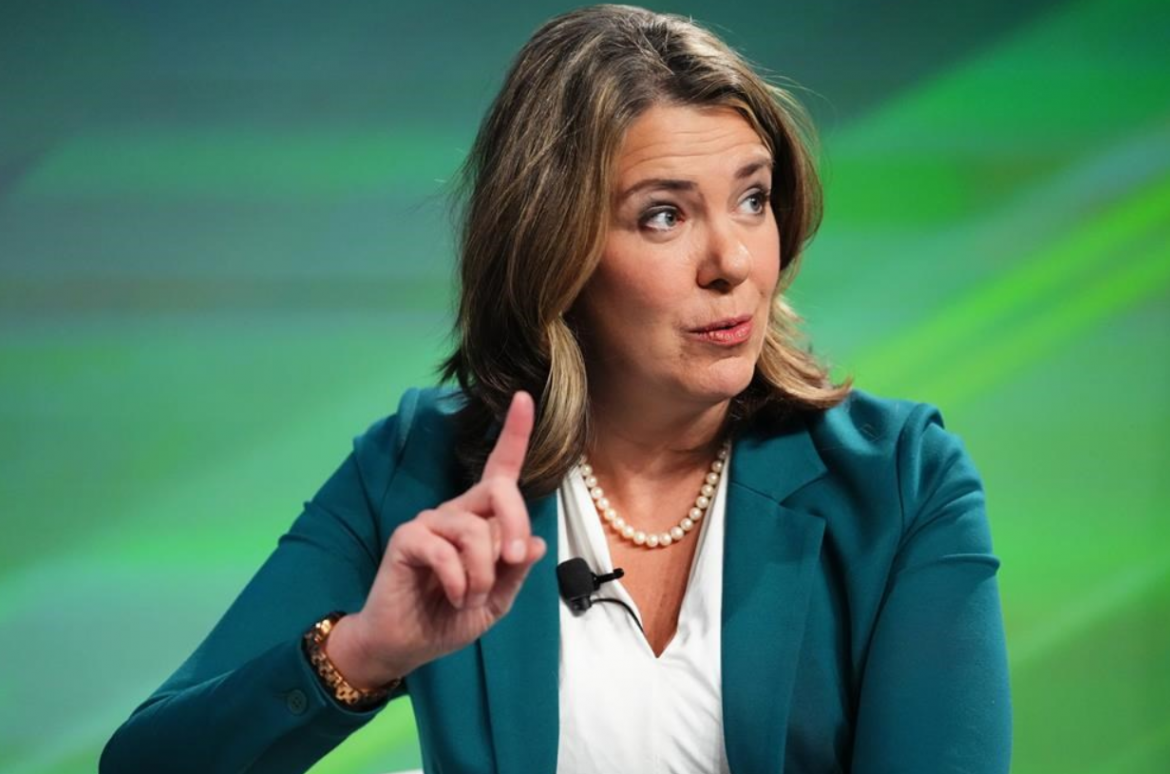
Danielle Smith has had one of the most unusual political careers in contemporary Canadian provincial politics. Her path has included journalism, business advocacy, leadership of the Wildrose Party, a dramatic political defection, years outside elected office and an eventual return that took her to the premiership of Alberta. Since October 2022, she has served as Alberta’s 19th premier and leader of the United Conservative Party.
Born in Calgary in 1971, Smith studied at the University of Calgary, earning degrees in economics and English. Those subjects reflected interests that would remain central throughout her career: economic policy, communication and debates about the proper relationship between individuals, businesses and government.
Before becoming one of Alberta’s best-known politicians, Smith worked in several public-policy and media roles. She served as a trustee with the Calgary Board of Education and worked with organisations concerned with property rights and small-business policy. She also became a journalist and commentator, developing the communication skills that would later become a significant part of her political style.
Her political breakthrough came through the Wildrose movement. The party positioned itself to the right of Alberta’s long-governing Progressive Conservatives, appealing to voters who believed the provincial government had moved away from conservative principles. Smith became Wildrose leader in 2009 and subsequently led the party into the 2012 Alberta election.
Although Wildrose did not form government, it became the Official Opposition and Smith emerged as one of the most important conservative politicians in the province. Her combination of media experience, economic conservatism and strong emphasis on individual freedom made her a highly visible alternative to the Progressive Conservative establishment.
Then came one of the most controversial decisions of her career. In late 2014, Smith and several Wildrose colleagues crossed the floor to join the governing Progressive Conservatives. For many Wildrose supporters, the move represented a betrayal. Smith subsequently lost the Progressive Conservative nomination in her riding and left elected politics.
For several years, it appeared possible that this episode had permanently ended her political career. Smith returned to broadcasting and became a radio host, while also working in business advocacy, including as president of the Alberta Enterprise Group.
Alberta’s conservative political landscape changed dramatically during her absence. The Progressive Conservative and Wildrose parties eventually merged to create the United Conservative Party. When UCP leader and premier Jason Kenney faced internal dissatisfaction and announced his departure, Smith saw an opportunity to return.
She won the UCP leadership contest in October 2022 and was sworn in as Alberta’s 19th premier on October 11. She subsequently entered the legislature representing Brooks-Medicine Hat and led the UCP to victory in the 2023 provincial election, securing her position as premier through a general-election mandate.
Energy policy has naturally occupied a central place in Smith’s premiership. Alberta possesses enormous oil and natural-gas resources, and disputes between provincial and federal governments over environmental regulation, emissions and energy development have shaped provincial politics for decades. Smith has consistently argued for greater provincial authority and has strongly challenged federal policies that she believes interfere with Alberta’s constitutional jurisdiction or economic interests.
That philosophy contributed to her government’s emphasis on what it describes as Alberta sovereignty. Smith has presented provincial autonomy as a means of defending Alberta against federal decisions, while critics have questioned the legal and political consequences of confrontational approaches toward Ottawa.
Healthcare, taxation, affordability and economic growth have also been significant issues during her government. Her administration has pursued restructuring within Alberta’s healthcare system while maintaining a broader political message centred on lower taxes, resource development, personal freedom and reducing what the UCP considers unnecessary government interference.
Smith is a particularly effective communicator to voters who share her political worldview. Years in broadcasting made her comfortable with long-form interviews and direct explanations of policy. At the same time, that communication style has sometimes produced controversy when comments are interpreted differently from how she says she intended them.
Her premiership has also unfolded during growing debate over Alberta’s place within Canada. In 2026, the question of separatism again became prominent in provincial politics. Smith has publicly argued that Alberta should remain part of Canada while also maintaining that dissatisfaction with the federal government must be taken seriously.
This combination—Canadian federalism alongside demands for much greater provincial autonomy—captures an important part of Smith’s political position. She has attempted to channel Western alienation without personally embracing separation, while critics argue that some of her government’s policies risk encouraging the very separatist sentiment she says she does not support.
Danielle Smith’s political history is ultimately a story of an extraordinary comeback. The 2014 floor crossing appeared to destroy her prospects in elected politics. Less than a decade later, she had returned as leader of Alberta’s governing conservative party and premier of the province.
Whether supporters see her as a determined defender of Alberta or opponents regard her approach as unnecessarily confrontational, Smith has become one of Canada’s most consequential provincial politicians. Her career demonstrates how dramatically political fortunes can change—and how questions about energy, federalism, individual freedom and Alberta’s relationship with Ottawa continue to shape politics in Canada’s western provinces.